The building
The house Hansen built
How the Musikverein came to be: the Ringstrasse plot, Theophil Hansen's Greek-temple design, the 1870 opening, the organ and the two halls behind the facade.
Reserve your seat for the concert ↗Quick answer
The house was designed by the Danish-born architect Theophil Hansen on land granted by Emperor Franz Joseph I during the building of the Ringstrasse in 1863, and it was inaugurated on 6 January 1870. Modelled on an ancient Greek temple, it holds the narrow, gilded Golden Hall and the smaller Brahms Hall. Its sound came from Hansen's intuition rather than from acoustic studies.
A society and a plot
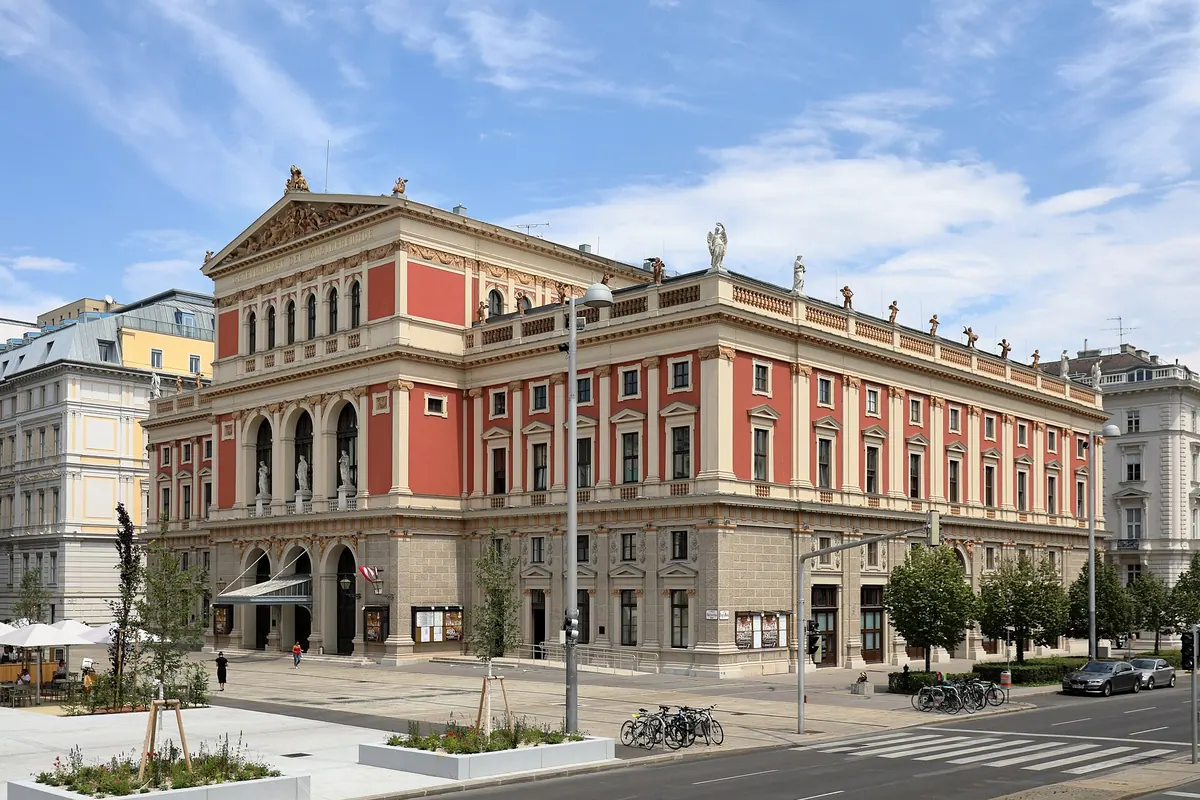
The Gesellschaft der Musikfreunde, the Society of Friends of Music in Vienna, was founded in 1812 by Joseph Sonnleithner, a friend of Beethoven. It promoted music through concerts, founded the Vienna Conservatory in 1819 and the Wiener Singverein in 1858, and built its own house in 1870. When the Ringstrasse was laid out in 1863, Emperor Franz Joseph I granted the society a plot for a new concert hall between Karlsplatz and Bösendorferstraße.
The architect
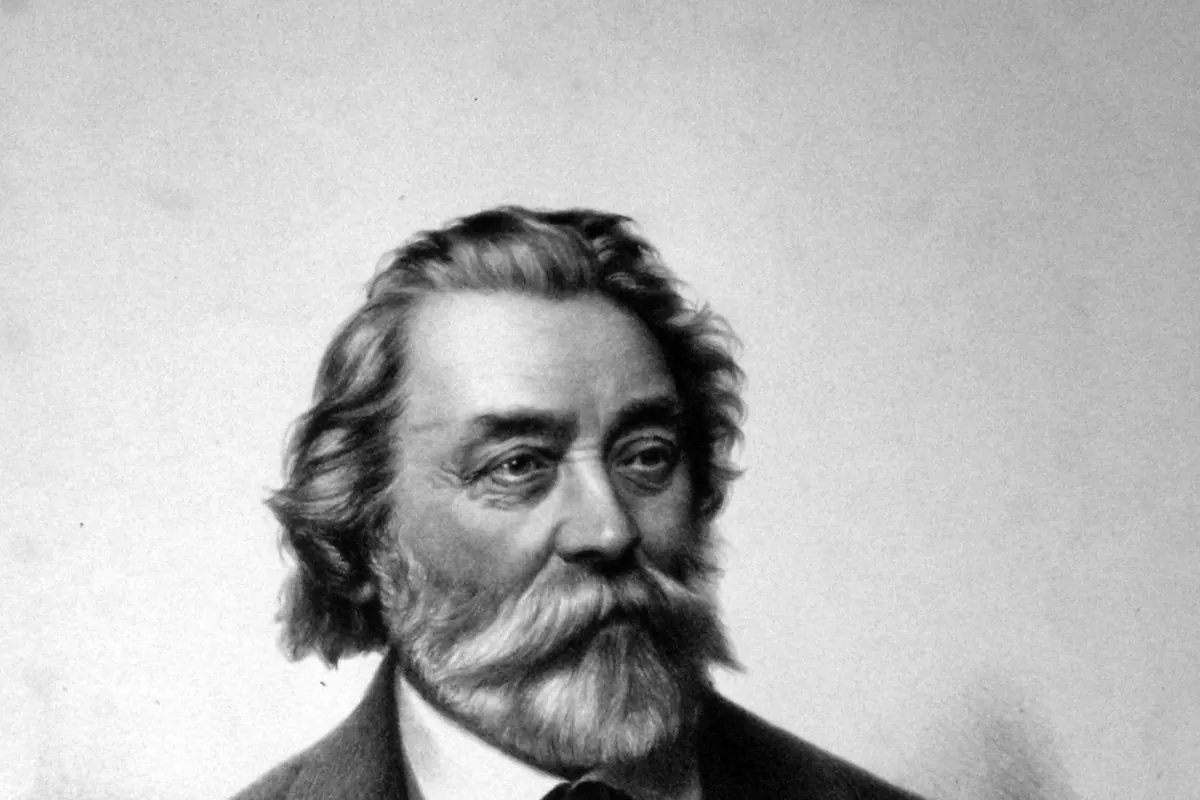
Theophil Hansen was born in Copenhagen in 1813 and moved to Athens in 1837, where he designed the National Observatory and two of the three buildings of the so-called Athenian Trilogy. A Greek donor called him to Vienna in 1846. He became one of the most important architects of the Ringstrasse, and his best-known work there is the Parliament building, also dressed as an ancient temple. He was made a baron in 1884 and died in Vienna in 1891.
A temple for music
Hansen designed the house in the Neoclassical style of an ancient Greek temple, with a concert hall and a smaller chamber hall under one roof. German Wikipedia says its columns, caryatids and pediment reliefs invite the thought that this is a temple built for music. The house was inaugurated on 6 January 1870. A major donor, the industrialist and liberal politician Nikolaus Dumba, gave his name to a nearby street, and another, Simon Sinas, is also credited.
The Golden Hall
The Great Hall, called the Golden Hall, is 49 metres long, 19 wide and 18 high, with 1,744 seats and standing room for 300. Its lively acoustics rest mostly on Hansen's intuition, since he could not draw on studies of architectural acoustics. The narrow shoebox shape, thick plaster walls and many reflecting and diffusing surfaces give strong lateral reflections and a warm, rich and clear sound. The Skandalkonzert of 1913 was given here, and it is the home of the annual New Year's Concert.
The organ
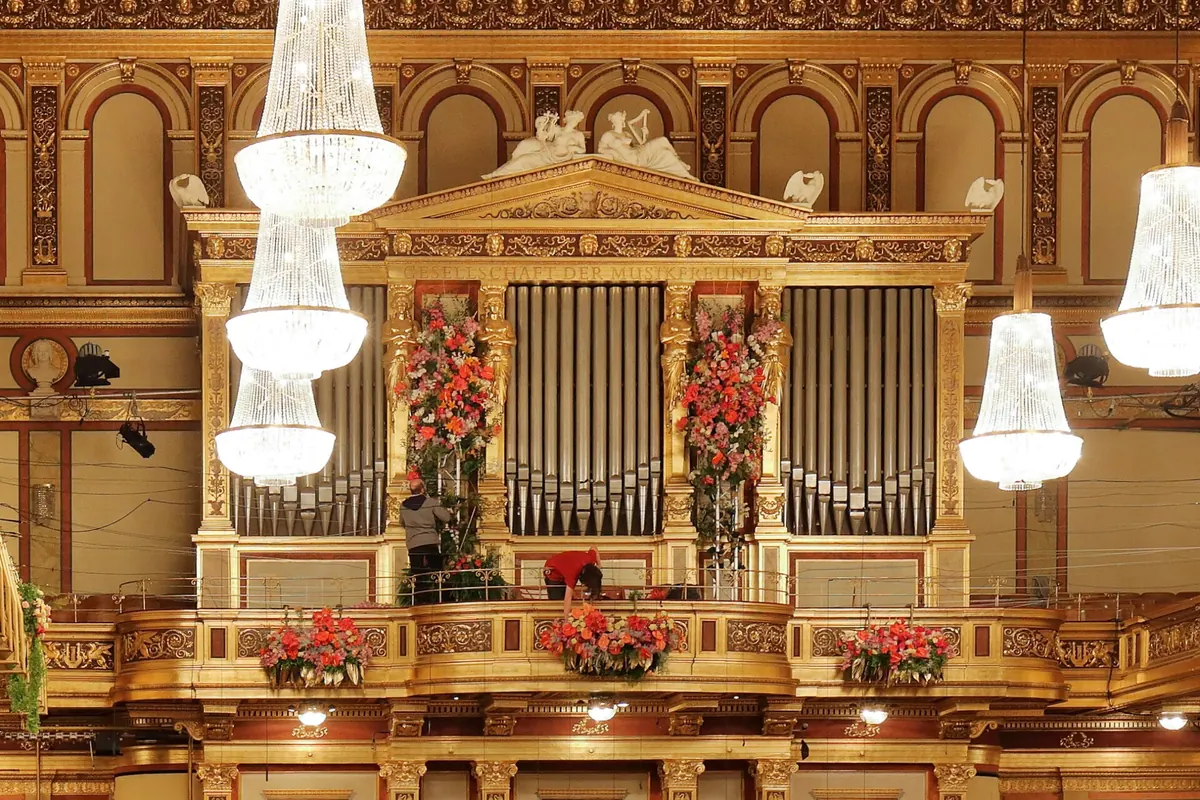
German Wikipedia records that the society chose the German organ builder Friedrich Ladegast, who offered an instrument with 44 stops on three manuals and a pedal, and that Ladegast handed over the finished work in November 1872. Anton Bruckner gave its first organ recital that year. The present instrument was installed in 1907 by the Austrian firm Rieger, one admired by musicians such as Franz Schmidt and Marcel Dupré, and it was rebuilt in 2011.
The Brahms Hall
The second-largest hall in the building was known only as the small hall until 1937, when it was named for Johannes Brahms, who had been appointed the society's music director in 1872. Its predecessors in that job included Carl Heissler and Anton Rubinstein, and later directors included Wilhelm Furtwängler, Herbert von Karajan and Gustav Mahler. English Wikipedia calls the Brahms Hall a Greek Renaissance room, praised for peacefulness and simple grandeur.
What lies underneath
In 2001 the Austrian architects Wilhelm Holzbauer and Dieter Irresberger were commissioned to design four new halls beneath the Golden Hall, with the acoustic consultant Karl Bernd Quiring. The underground extension was finished in 2004 and added the Glass, Metal, Wooden and Stone halls, used for concerts, lectures and receptions. They are not the rooms on this page's ticket, which are the two original halls of Hansen's house.
Sources